Mānuka Honey for Gut Microbiome Health

Mānuka Honey for Gut Microbiome Health

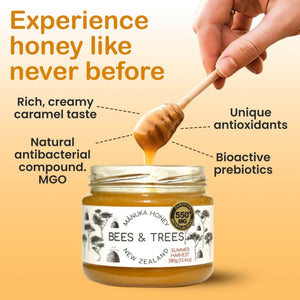
Mānuka honey supports a healthy microbiome through a powerful dual action: its natural oligosaccharides act as a prebiotic, selectively feeding beneficial bacteria such as Lactobacillus and Bifidobacterium, while its high concentration of Methylglyoxal (MGO) provides targeted antibacterial protection against harmful species, creating a more balanced, resilient environment for everyday gut health.

At Bees & Trees, we believe in providing transparency, the highest quality, and the best experience possible. Our authentic Mānuka honey is traceable from our hives straight to your door. Every jar delivers proven antimicrobial properties, trusted for digestive comfort, gut health, and daily wellness for you and your family.


img

Which MGO Concentration Should You Choose for Your Microbiome Support Needs?

Select the MGO concentration that fits your needs, whether you are maintaining gentle daily prebiotic support or need potent help to reset your gut health.

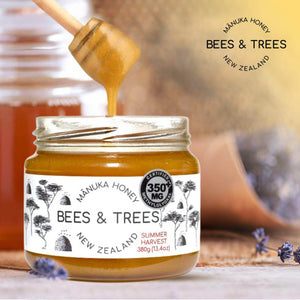
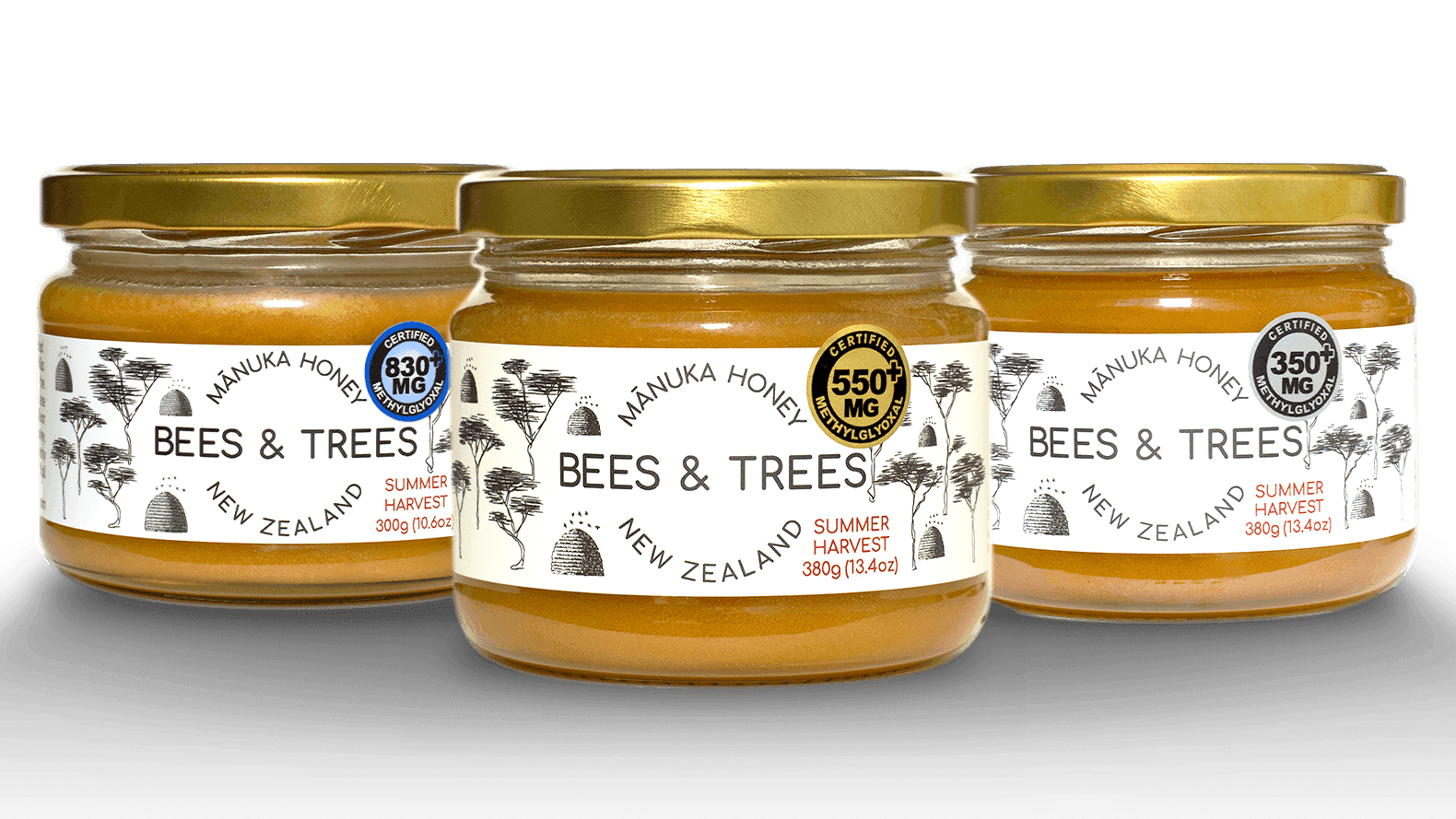
Mānuka Honey Mid-Activity 350+ MGO/kg

Mānuka Honey Mid-Activity 350+ MGO/kg

Our 350+ MGO honey is a gentle, everyday option to support your daily microbiome health.

Best for: Daily prebiotic support, maintaining regularity, and supporting beneficial bacteria in the gut.

Shop now
Mānuka Honey High-Activity 550+ MGO/kg

Mānuka Honey High-Activity 550+ MGO/kg

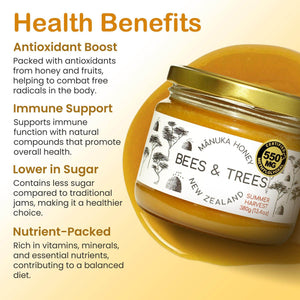
Our 550+ MGO honey offers stronger potency for those seeking targeted support for microbial balance. 

Best For: Preventing "traveler's tummy", supporting recovery after a course of antibiotics, or managing mild gut imbalance.

Shop now
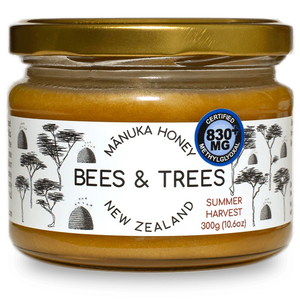
Mānuka Honey Founder's Reserve 830+ MGO/kg

Mānuka Honey Founder's Reserve 830+ MGO/kg

Our 830+ MGO jar delivers maximum strength, providing a robust bioactive shield to help reset a balanced gut environment.

Best for: Addressing significant microbial imbalances, or when you need maximum bioactive strength to help reset your gut environment.

Shop now

For severe pain, bleeding, or vomiting, always consult your healthcare provider immediately.

What the Science Suggests

Benefits of Mānuka Honey for a Healthy Microbiome

Research shows Mānuka honey's microbiome support comes from its natural oligosaccharides, which selectively feed beneficial bacteria like Lactobacillus and Bifidobacterium, while its high MGO content provides stable antibacterial activity against harmful species. (Math 2013; Mavric 2008) Together, these properties build a healthier gut environment, nourish beneficial bacteria while keeping harmful ones in check, naturally supporting microbiome health from the inside out. (Gośliński 2023; al Somal 1994)

While everyone may have a unique response, Mānuka honey is frequently used to help with:

Gut Flora Balance

Mānuka honey acts as a prebiotic, providing oligosaccharides that feed beneficial bacteria like Lactobacillus, supporting a thriving and diverse microbiome.  (Math 2013; Gośliński 2023)

H. pylori Management

Lab studies have demonstrated that high MGO levels provide targeted antimicrobial action, helping to create an unfavorable environment for bacteria like H. pylori that can contribute to digestive imbalances. (al Somal 1994; Mavric 2008; Adam 2020)

Diarrhea recovery

Clinical research has shown that honey used alongside oral rehydration solution significantly shortened the duration of diarrhea and vomiting in gastroenteritis, while MGO-driven antibacterial activity helps restore gut balance during recovery.(Abdulrhman 2010; Hamad 2019)

Gut healing

Cellular studies indicate that Mānuka honey supports vascularization and tissue healing, while its phenolic antioxidants reduce the oxidative stress that compromises gut lining integrity and barrier function. (Jenkins 2012; Liang 2023)

Digestive health

Mānuka honey's dual action, oligosaccharide-driven prebiotic nourishment for beneficial flora, combined with MGO antibacterial activity against harmful bacteria, supports a balanced digestive environment that promotes sustained gut health and microbial resilience. (Math 2013; Mavric 2008)

Soothing Gastritis

Mānuka honey’s thick, viscous texture coats the stomach to ease irritation, while its antioxidants reduce oxidative stress and support a balanced inflammatory response for a calmer gastric environment. (Almasaudi 2017; Becerril-Sánchez 2021)

Image item 1

New Zealand.com License no. 100293

Image item 2

GenuHoney Authenticity
Certified

Image item 3

Glyphosate Residue Free

Image item 4

100% Satisfaction Guaranteed

WHY CHOOSE BEES & TREES

Authenticity Sealed in Every Jar

We guarantee that what you see on the label is exactly what you get inside the jar.

Independently Tested for Potency & Purity

Every batch is verified by accredited labs, with MGO results on the label and certificates published for full transparency.
Authentic New Zealand Sourcing

Harvested in the remote hillsides of Taranaki, our honey carries the Fernmark License, guaranteeing authenticity.
Founded on Sustainability

From supporting New Zealand’s native ecosystem restoration to packaging in eco-friendly glass, we’re committed to protecting the environment that creates our honey.

FAQ

  • Can Mānuka honey support gut microbial balance & your gut microbiome?

  • Mānuka honey supports gut microbial balance through two complementary mechanisms: its natural oligosaccharides act as a prebiotic substrate that selectively feeds beneficial bacteria such as Lactobacillus, while its MGO content exerts antibacterial activity against pathogenic species,  creating a more favorable environment for a diverse, resilient microbiome. (Math 2013; Mavric 2008) This dual-action profile makes it a scientifically grounded, gentle addition to a microbiome-supportive diet, though it is best used as a complement to, not a replacement for, a varied, fibre-rich dietary pattern.

  • Is Mānuka honey a prebiotic & does it 'feed' good gut bacteria?

  • Yes. Mānuka honey acts as a prebiotic because it contains natural oligosaccharides, non-digestible carbohydrates that reach the colon intact and serve as a selective fermentation substrate for beneficial bacteria, including Lactobacillus and Bifidobacterium. (Math 2013; Gośliński 2023) By preferentially nourishing these beneficial species, regular consumption may support a more diverse and stable gut microbial ecosystem, though the prebiotic effect varies with individual microbiome composition and overall dietary context.

  • Can Mānuka honey help restore gut balance after antibiotics?

  • Mānuka honey can be used during antibiotic recovery as a functional food that provides oligosaccharide-driven prebiotic support for the beneficial flora depleted by antibiotic treatment. (Math 2013; Gośliński 2023) Its MGO antibacterial activity is selective rather than broad-spectrum, meaning it targets pathogenic species without the indiscriminate disruption associated with antibiotic use, making it a complementary, easily tolerated addition to post-antibiotic gut restoration alongside probiotic foods or supplements. (Mavric 2008)

  • Can Mānuka honey help with bloating, gas, or IBS symptoms linked to gut flora imbalance?

  • Mānuka honey's prebiotic oligosaccharides may support microbial balance and digestive comfort for some individuals, but it is important to note that honey contains fructose and oligosaccharides classified as FODMAPs, fermentable carbohydrates that can exacerbate bloating, gas, and IBS symptoms in sensitive individuals. (Barrett 2013; Gośliński 2023) Those with IBS, particularly during a low-FODMAP elimination phase, should start with no more than ½ teaspoon and monitor their individual response carefully before increasing serving size.

  • Should I take Mānuka honey with probiotics or fermented foods?

  • Combining Mānuka honey with probiotic-rich foods or supplements creates a synbiotic effect; a well-established nutritional concept in which a prebiotic substrate and live probiotic cultures work together to enhance microbial colonisation and survival in the gut. (Gibson 2017) The oligosaccharides in Mānuka honey provide the fermentation substrate that helps probiotic cultures such as Lactobacillus and Bifidobacterium thrive, potentially amplifying the microbiome benefit beyond either component alone.

  • How do I take Mānuka honey for gut microbial balance (in food or tea)?

  • A daily serving of ½–1 teaspoon, taken straight or dissolved in warm, not boiling, water or herbal tea, is the most practical approach; research on honey as a functional food supports use in this range without adverse effects in healthy adults, and avoiding boiling temperatures helps preserve heat-sensitive phenolic bioactives. (Bogdanov 2008; Johnston 2018) For microbiome support specifically, pairing it with probiotic-rich foods such as yogurt or kefir creates a symbiotic effect that may enhance the prebiotic benefit. (Gibson 2017) Consistency over time is more important than serving size.

  • Is Mānuka honey low FODMAP?

  • No. Honey is classified as high FODMAP due to its fructose content and the presence of oligosaccharides, both of which are fermentable carbohydrates that can trigger symptoms in IBS patients following a low-FODMAP protocol. (Barrett 2013; Monash University Low FODMAP Diet) During the strict elimination phase, honey should be avoided or limited to very small test amounts (½ teaspoon maximum) to assess individual tolerance. If you are following a medically supervised low-FODMAP programme, consult your dietitian before incorporating Mānuka honey regularly.