Mānuka Honey for Stomach Ulcer Relief

Mānuka Honey for Stomach Ulcer Relief

Mānuka honey offers three powerful benefits for stomach ulcer support: its thick texture gently coats and soothes the stomach lining, while its high Methylglyoxal (MGO) antibacterial activity fights H. pylori. Finally, antioxidants relieve oxidative stress, which creates an environment that promotes the body's natural healing.

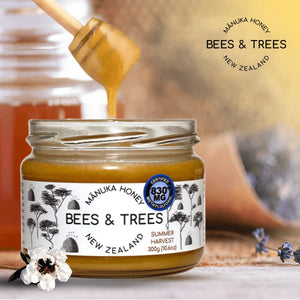
At Bees & Trees, we believe in providing transparency, the highest quality, and the best experience possible. Our authentic Mānuka honey is traceable from our hives straight to your door. Every jar delivers proven antimicrobial properties, trusted for digestive comfort, gut health, and daily wellness for you and your family.


img

Which MGO Concentration Is Right For Your Stomach Care and Protection

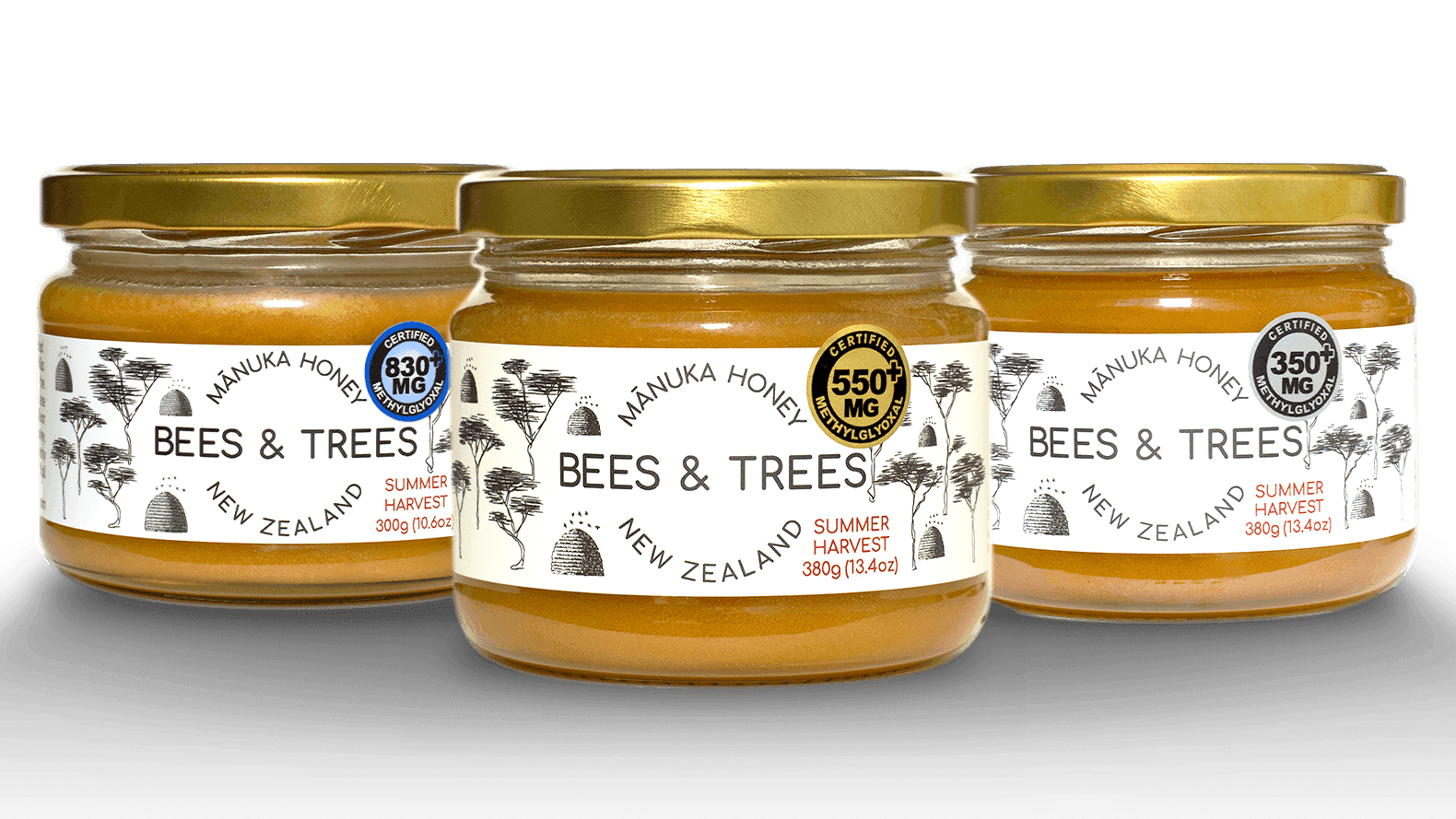
Select the MGO concentration that fits your needs, whether you are maintaining a healthy gut environment or seeking intensive support during active sensitivity or flare-ups.

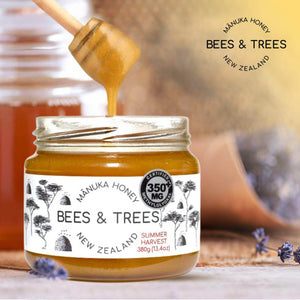
Mānuka Honey Mid-Activity 350+ MGO/kg

Mānuka Honey Mid-Activity 350+ MGO/kg

Our 300+ MGO jar is designed to maintain a balanced digestive environment rather than address active bacterial challenges.

Best for:  Those seeking a natural, daily "liquid shield" to support general gastric wellness and maintain a healthy stomach lining.

Shop now
Mānuka Honey High-Activity 550+ MGO/kg

Mānuka Honey High-Activity 550+ MGO/kg

Our 550+ MGO jar provides higher concentrations of bioactivity that researchers look for when studying Mānuka honey's interactions with gastric pathogens.

Best for: Addressing flare-ups of digestive discomfort and providing a more robust defense against gastric pathogens.

Shop now
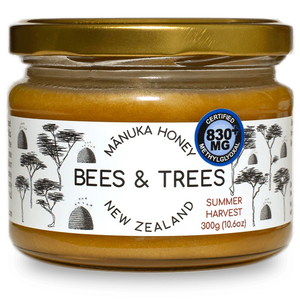
Mānuka Honey Founder's Reserve 830+ MGO/kg

Mānuka Honey Founder's Reserve 830+ MGO/kg

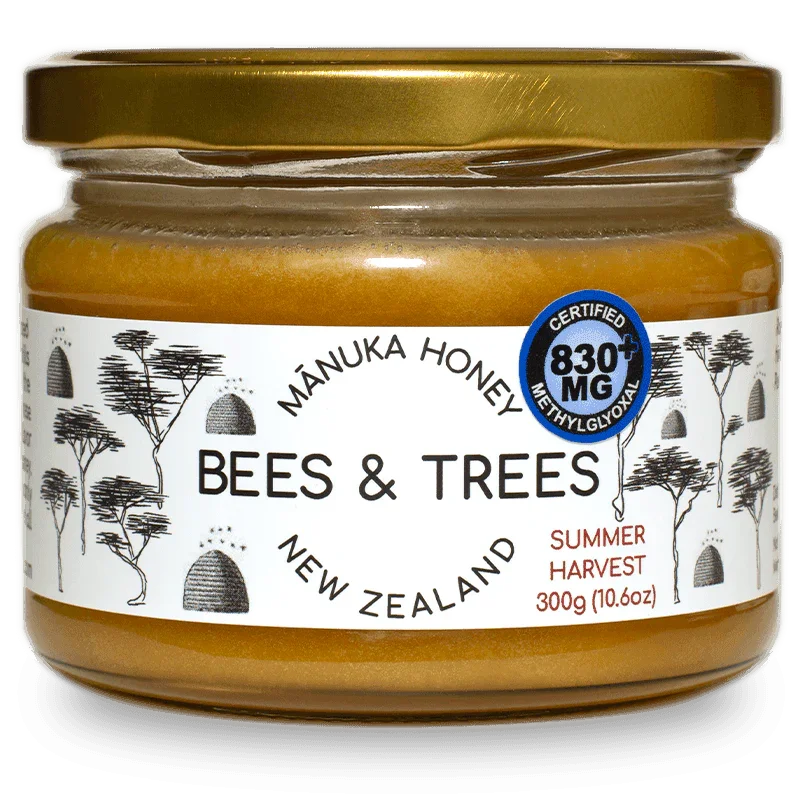
Our 830+ MGO jar aligns with the highest potency levels used in laboratory settings to achieve the most rapid and extensive inhibition of H. pylori.

Best for:  Those seeking the highest non-peroxide anti-bacterial activity to directly inhibit H. pylori and provide maximum soothing relief for active stomach ulcers.

Shop now

For severe pain, bleeding, or vomiting, always consult your healthcare provider immediately.

What the Science Suggests

Manuka Honey Benefits for Stomach Ulcer Healing Support

Mānuka honey’s digestive power centers on its high Methylglyoxal (MGO) content (Mavric 2008; Johnston 2018). Research shows that MGO can directly inhibit the growth of H. pylori, the primary bacteria linked to stomach ulcers (al Somal 1994, Adam 2020). By targeting these pathogens naturally, high MGO Mānuka honey serves as a potent ally in managing gastric health and promoting long-term comfort.

While everyone may have a unique response, Mānuka honey is frequently used to help with:

H. pylori Defense

Laboratory studies examining Mānuka honey benefits for H. pylori show that its unique MGO content can directly inhibit the growth of the bacteria most commonly linked to stomach ulcers. (al Somal 1994; Mavric 2008)

Stomach Lining Protection

Research suggests Mānuka honey protects the stomach lining by helping to preserve the natural mucus barrier of the stomach lining, by acting as a "liquid shield" against acid damage and irritation. (Almasaudi 2016; Almasaudi 2017)

Soothing Inflammation

Research on Mānuka honey's benefits for gut inflammation suggests that its phenolic compounds help neutralize free radicals and reduce the oxidative stress that can lead to gastric inflammation. (Becerril-Sánchez 2021, Almasaudi 2017)

Ulcer Index Support

Controlled studies on Mānuka honey's benefits for stomach ulcer support have observed that it significantly lowers the "ulcer index," indicating a strong protective effect on the integrity of the gastric lining. (Becerril-Sánchez 2021, Almasaudi 2017)

Microbiome Resilience

Preliminary research on Mānuka honey benefits for the gut microbiome suggests it may enhance the effectiveness of certain treatments against resistant bacterial strains. (Almasaudi 2016, Fazalda 2018)

Natural Gut Repair

Cellular studies exploring Mānuka honey for gut repair indicate that it supports "vascularization", a key process that brings blood flow and nutrients to damaged tissue to aid natural healing. (Jenkins 2012, Liang 2023)

Image item 1

New Zealand.com License no. 100293

Image item 2

GenuHoney Authenticity
Certified

Image item 3

Glyphosate Residue Free

Image item 4

100% Satisfaction Guaranteed

WHY CHOOSE BEES & TREES

Authenticity Sealed in Every Jar

We guarantee that what you see on the label is exactly what you get inside the jar.

Independently Tested for Potency & Purity

Every batch is verified by accredited labs, with MGO results on the label and certificates published for full transparency.
Authentic New Zealand Sourcing

Harvested in the remote hillsides of Taranaki, our honey carries the Fernmark License, guaranteeing authenticity.
Founded on Sustainability

From supporting New Zealand’s native ecosystem restoration to packaging in eco-friendly glass, we’re committed to protecting the environment that creates our honey.

FAQ

  • What does the research say about Mānuka honey for stomach ulcers?

  • Current research is promising. Multiple in vitro and animal studies demonstrate Mānuka honey's ability to inhibit H. pylori and reduce gastric mucosal damage, though large-scale human clinical trials are still needed to confirm specific healing protocols. (Adam 2020, Fazalda 2018)

  • Is Mānuka honey effective against H. pylori bacteria?

  • Laboratory studies have consistently shown that Mānuka honey has a bactericidal (kills bacteria) effect on H. pylori due to its Methylglyoxal (MGO) content. Researchers have observed that even at partial concentrations, high-MGO honey can inhibit the growth of these ulcer-causing bacteria. (al Somal 1994, Mavric 2008)

  • Can I use Mānuka honey for acid reflux (GERD) symptoms?

  • While not a cure for GERD, the physical properties of honey are well-documented. Its high viscosity and density allow it to coat the esophageal lining, which many users find provides immediate, soothing comfort against the sensation of rising stomach acid. (Math 2013, Gośliński 2023) Users who’ve tried Mānuka honey for GERD commonly describe noticeable, soothing relief, especially a reduced burning sensation and a calmer, less “raw” throat, often within minutes of taking a small spoonful. Some report it helps them feel more comfortable after meals or during reflux flare-ups, with a few saying it worked better for them than certain OTC options, though experiences vary, and a small number find that sweetness can be a trigger.

  • How does Mānuka honey support overall digestive health?

  • Beyond ulcers, research highlights Mānuka honey's potential as a prebiotic functional food. It contains oligosaccharides that have been shown to promote the growth of beneficial gut flora (like Lactobacillus), supporting a balanced microbiome, which is crucial for overall digestive resilience. (Math 2013, Gośliński 2023)

  • Is it safe to take Mānuka honey with ulcer medication?

  • Generally, yes. Mānuka honey is a food product and is typically safe to consume alongside standard antibiotics or proton pump inhibitors (PPIs). Some preliminary research even suggests potential synergistic benefits, but you should always consult your doctor before adding it to your treatment plan. (Sanz 2005, Schell 2022, Osato 2006)

  • What is the "ulcer index" mentioned in studies?

  • The "ulcer index" is a metric used in research to measure the severity and number of lesions in the stomach lining. Several animal studies have reported that pre-treatment with honey significantly lowered this index compared to control groups, indicating a protective effect. (Almasaudi 2016, Almasaudi 2017)

  • Why is MGO important for stomach issues?

  • Methylglyoxal (MGO) is the compound that gives Mānuka honey its unique stable antibacterial activity. (Mavric 2008) Research indicates that non-Mānuka honeys (which rely on hydrogen peroxide) often lose their activity when exposed to stomach fluids, whereas MGO remains stable and active in the gastric environment. (Carter 2016, Mandal 2011)

// Newsletter send // Newsletter send end