Mānuka Honey for Skin

Mānuka Honey for Skin

Mānuka honey has been historically prized in skincare for its ability to support hydration, skin balance, and a healthier-looking complexion. Its naturally occurring Methylglyoxal (MGO) contributes surface-level antibacterial activity, while its sugar-rich composition helps draw and retain moisture. It also contains phenolic compounds linked to antioxidant activity, which may help reduce visible stress on the skin.

At Bees & Trees, we believe in providing transparency, the highest quality, and the best experience possible. Traceable from our hives straight to your door, our authentic Mānuka honey is a true multi-tasker. Every jar delivers proven antimicrobial properties, trusted for radiant skin health and your daily internal wellness.

img

Which MGO Concentration Should You Choose for Your Skin?

Select the MGO concentration that fits your specific needs, whether you are maintaining daily hydration or actively seeking soothing support for sensitive, blemish-prone skin.

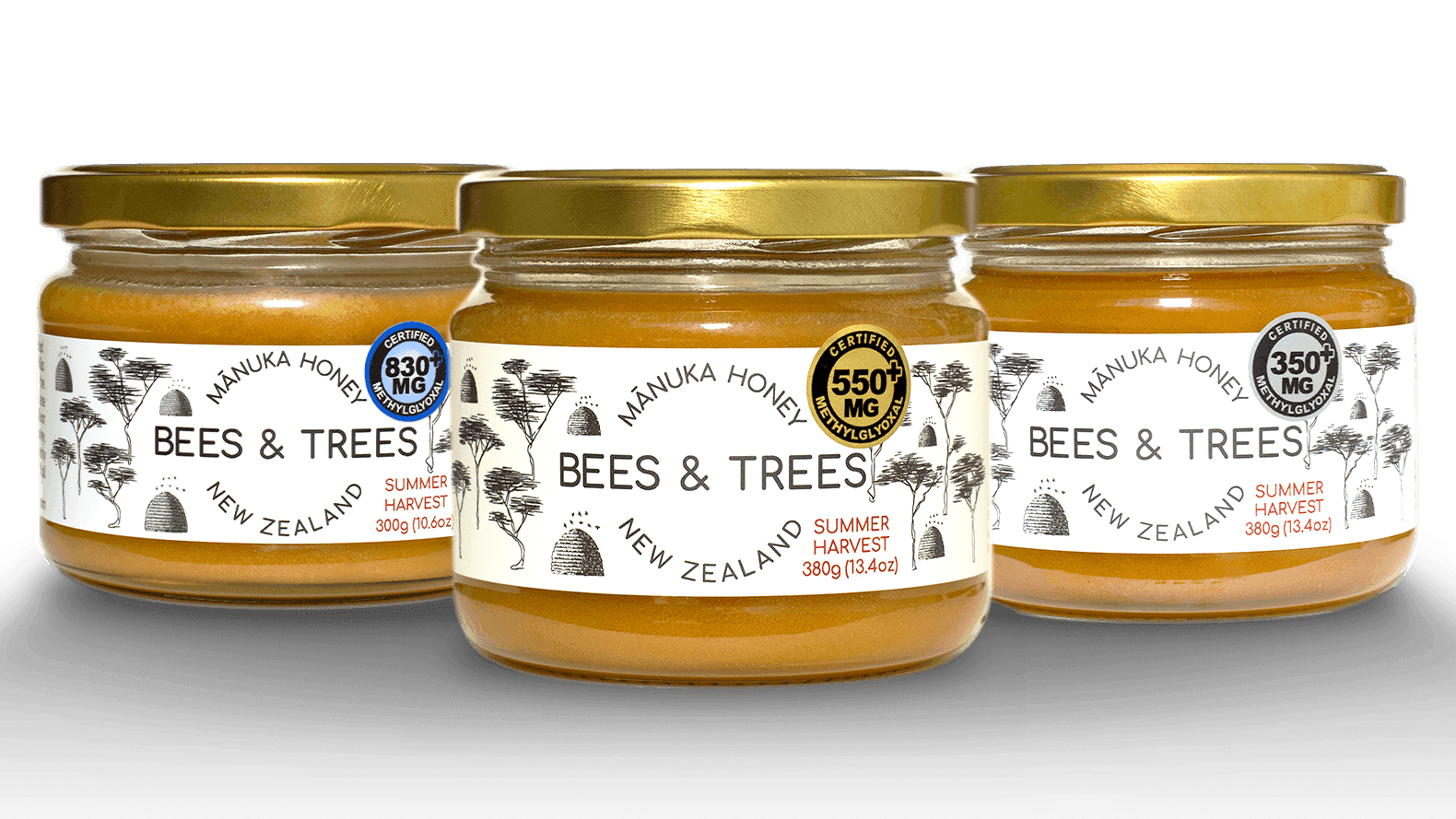
Mānuka Honey Mid-Activity 350+ MGO/kg

Mānuka Honey Mid-Activity 350+ MGO/kg

Our 350+ MGO honey serves as a gentle, balanced, everyday option that supports moisture retention and overall skin comfort.

Best for: Daily topical hydration, DIY face masks, soothing minor dry patches, and maintaining soft, resilient skin.

Shop now
Mānuka Honey High-Activity 550+ MGO/kg

Mānuka Honey High-Activity 550+ MGO/kg

Our 550+ MGO honey offers a higher concentration of active MGO, providing enhanced antibacterial and bioactive potency for proactive skincare.

Best for: Addressing occasional breakouts, soothing redness, and providing a restorative boost for tired, stressed skin.

Shop now
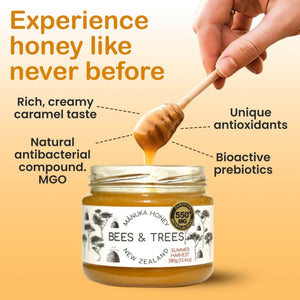
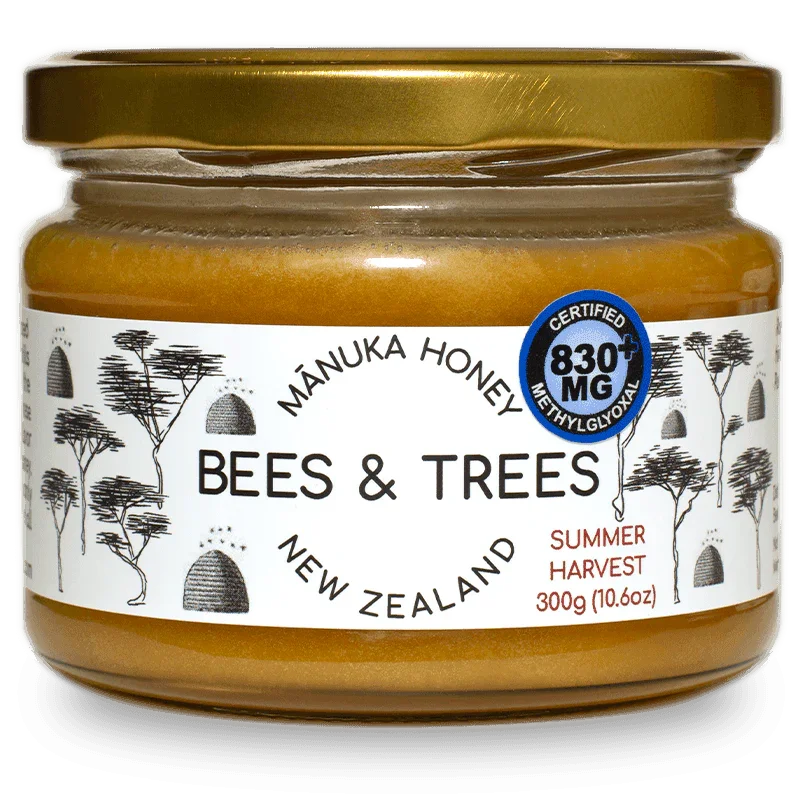
Mānuka Honey Founder's Reserve 830+ MGO/kg

Mānuka Honey Founder's Reserve 830+ MGO/kg

Our 830+ MGO jar offers our most concentrated levels of MGO, delivering maximum bioactive strength to actively manage inflamed or highly sensitive skin. 

Best for: Stronger spot-treatment of stubborn blemishes, supporting tissue recovery during active irritation, and maximum bioactive support.

Shop now

For severe pain, bleeding, or vomiting, always consult your healthcare provider immediately.

What the Science Suggests

Benefits of Mānuka Honey for Skin

Research on Mānuka honey in skin settings suggests its benefits come from three primary mechanisms. Its sugar-rich matrix helps draw and retain moisture in the outer skin layers, while MGO contributes antibacterial and anti-biofilm activity at the skin surface. Its phenolic compounds have been linked to antioxidant activity that may help reduce oxidative stress, while research suggests it may also modulate inflammatory signaling and support barrier-related pathways. Together, Manuka honey's compounds support hydration, skin balance, stronger barrier function, and a calmer-looking complexion. (Pavlačková et al., 2020; Maddocks et al., 2013; Johnston et al., 2018; Alangari et al., 2023)
Other Digestive Health Benefits Explored in the Research

Acne & Blemish Support

In vitro and review evidence suggest Mānuka honey’s MGO supports non-peroxide antibacterial activity against skin-relevant microbes, supporting its potential as a topical blemish support. (McLoone et al., 2016; Johnston et al., 2018)

Sunburn Support

Cellular studies using human keratinocyte models suggest honey extracts may provide cytoprotective and photoprotective activity against UVB-induced photodamage. (Karapetsas et al., 2020)

Dermatitis Support

Clinical and mechanistic research suggests topical Mānuka honey may improve atopic dermatitis lesions and influence inflammatory pathways relevant to dermatitis support. (Alangari et al., 2017; Alangari et al., 2023)

Burn Wound Support

Clinical trials and systematic reviews suggest honey dressings may support faster superficial burn healing and infection control compared with silver sulfadiazine. (Subrahmanyam, 1998; Aziz & Hassan, 2017)

Soothing Eczema Flares

Clinical and mechanistic research found that topical Mānuka honey improved atopic dermatitis lesions, with effects linked to anti-staphylococcal and immunoregulatory activity. (Alangari et al., 2017; Alangari et al., 2023)

Hydrating Dry Skin

Studies show Mānuka honey’s hygroscopic sugars act as natural humectants, drawing moisture into dry skin, while its amino acids and antioxidants restore balance and soothe compromised skin barriers. (Pavlačková et al., 2020; Woodward, 2019)

Image item 1

100% Satisfaction Guaranteed

Image item 2

Glyphosate Residue Free

Image item 3

GenuHoney Authenticity
Certified

Image item 4

New Zealand.com License no. 100293

WHY CHOOSE BEES & TREES

Authenticity Sealed in Every Jar

We guarantee that what you see on the label is exactly what you get inside the jar.

Founded on Sustainability

From supporting New Zealand’s native ecosystem restoration to packaging in eco-friendly glass, we’re committed to protecting the environment that creates our honey.

Authentic New Zealand Sourcing

Harvested in the remote hillsides of Taranaki, our honey carries the Fernmark License, guaranteeing authenticity.

Independently Tested for Potency & Purity

Every batch is verified by accredited labs, with MGO results on the label and certificates published for full transparency.

FAQ

  • Is Mānuka honey good for your skin?

  • Yes, clinical literature suggests Mānuka honey may serve as a supportive topical option that addresses moisture, microbial balance, and barrier resilience through three distinct mechanisms. First, its natural sugars act as humectants, drawing moisture to the skin to help improve surface hydration. Second, its high MGO content may offer stable antibacterial activity, which can help manage surface bacteria and support a clearer-looking complexion. Finally, its phenolic compounds and antioxidants may help ease oxidative stress and visibly soothe surface reactivity, providing gentle support for a compromised skin barrier and everyday comfort. (Burlando & Cornara, 2013; Johnston et al., 2018; Pavlačková et al., 2020; Alangari et al., 2023)

  • What makes Mānuka honey different from regular honey for skin?

  • While all raw honey offers basic humectant moisture properties, regular honey relies on hydrogen peroxide for its antibacterial properties, a fragile compound that is rapidly destroyed by natural enzymes (catalase) present on the skin. Mānuka honey stands apart because it is rich in Methylglyoxal (MGO). MGO delivers stable, non-peroxide antibacterial activity that resists enzymatic breakdown, remaining active on the skin longer. This makes Mānuka a significantly more resilient, targeted choice for promoting clarity, microbial balance, and visible calm in the skin. (Mavrić et al., 2008; Johnston et al., 2018)

  • Can Mānuka honey help dry or sensitive skin?

  • Yes. Mānuka honey may be helpful for dry or sensitive-looking skin because its natural hygroscopic sugars act as humectants, pulling moisture into the skin for deep hydration. Research also suggests Mānuka honey's potent phenolic and antioxidant compounds may influence pathways involved in skin inflammation and barrier stress, which supports its use as a gentle option for skin that feels tight, reactive, or easily irritated. As with any natural ingredient, start with a small patch test first. (Pavlačková et al., 2020; Woodward, 2019; Alangari et al., 2023)

  • Can Mānuka honey help blemish-prone skin?

  • Yes, Mānuka honey may provide targeted support for a clearer, more balanced complexion. Its high MGO content has been shown in laboratory studies to offer antibacterial defense against blemish-causing bacteria. Additionally, its antioxidant profile may help neutralize free radicals and visibly soothe surface reactivity. Used as a targeted spot application or mask, it serves as a gentle, evidence-based addition to your skincare routine. (McLoone et al., 2016; Maddocks et al., 2013; Johnston et al., 2018)

  • Should I use Mānuka honey topically or eat it for skin benefits?

  • For skin-specific benefits, topical use has the strongest support. Eating Mānuka honey can be part of a daily wellness routine, but the research connecting honey to hydration, barrier support, dermatitis improvement, and wound repair is mainly based on direct skin application. If your goal is visible skin comfort, apply it topically and choose clean, authentic Mānuka honey with a verified MGO rating. (Jull et al., 2015; Alangari et al., 2017; Pavlačková et al., 2020)

  • What MGO rating is best for skin benefits?

  • The appropriate MGO rating depends entirely on your specific skincare goals. A higher MGO rating indicates a greater concentration of Mānuka’s bioactive compounds. For daily hydration and baseline barrier support, 350+ MGO is a practical starting point. For more targeted support to address visible irritation or promote surface balance, 550+ or 830+ MGO provides a more robust bioactive profile. (Mavrić et al., 2008; Johnston et al., 2018; Nolan et al., 2020)

  • Can I use regular jarred Mānuka honey on open skin wounds?

  • Food-grade Mānuka honey is best reserved for general skincare, masks, and intact skin. For open wounds, burns, infected skin, or post-procedure healing, clinical research uses sterilized, medical-grade honey, although many consumers report great results in the use of food-grade Mānuka honey for cuts, soothing minor burns and wound care. If a wound is deep, infected, painful, slow to heal, or worsening, it should be assessed by a healthcare professional. (Jull et al., 2015; Scepankova et al., 2021; Nolan et al., 2020)

  • How often should I use Mānuka honey for skin support?

  • For general skin support, starting with short, regular topical applications is the most practical approach. Apply a thin layer as a wash-off mask a few times a week and monitor your skin's response. Since natural ingredients can still trigger sensitivities, always perform a small patch test before incorporating them fully into your routine. (Matos et al., 2015; Nyman et al., 2021)

    Note: Never give honey to infants under 12 months, and consult your doctor if you have diabetes, bee-product allergies, open wounds, infected skin, or a diagnosed skin condition.

    Disclaimer: These statements have not been evaluated by the Food and Drug Administration. This product is not intended to diagnose, treat, cure, or prevent any disease. This content is for informational purposes only and is not medical advice.