Mānuka Honey for IBS Support

Mānuka Honey for IBS Support

For those navigating digestive sensitivity, Mānuka honey provides dual-action dietary support to encourage regularity and ease occasional bloating. Its prebiotic oligosaccharides promote balanced gut flora, while its thick texture and bioflavonoids work synergistically to provide a soothing coating, buffering the digestive tract against the everyday stressors that trigger discomfort.

At Bees & Trees, we believe in providing transparency, the highest quality, and the best experience possible. Our authentic Mānuka honey is traceable from our hives straight to your door. Every jar delivers proven antimicrobial properties, trusted for digestive comfort, gut health, and daily wellness for you and your family.


img

Which MGO Concentration Is Right For IBS Support?

Match the MGO rating to your specific needs, whether you need gentle maintenance for everyday balance or strong support during sensitive flare-ups.

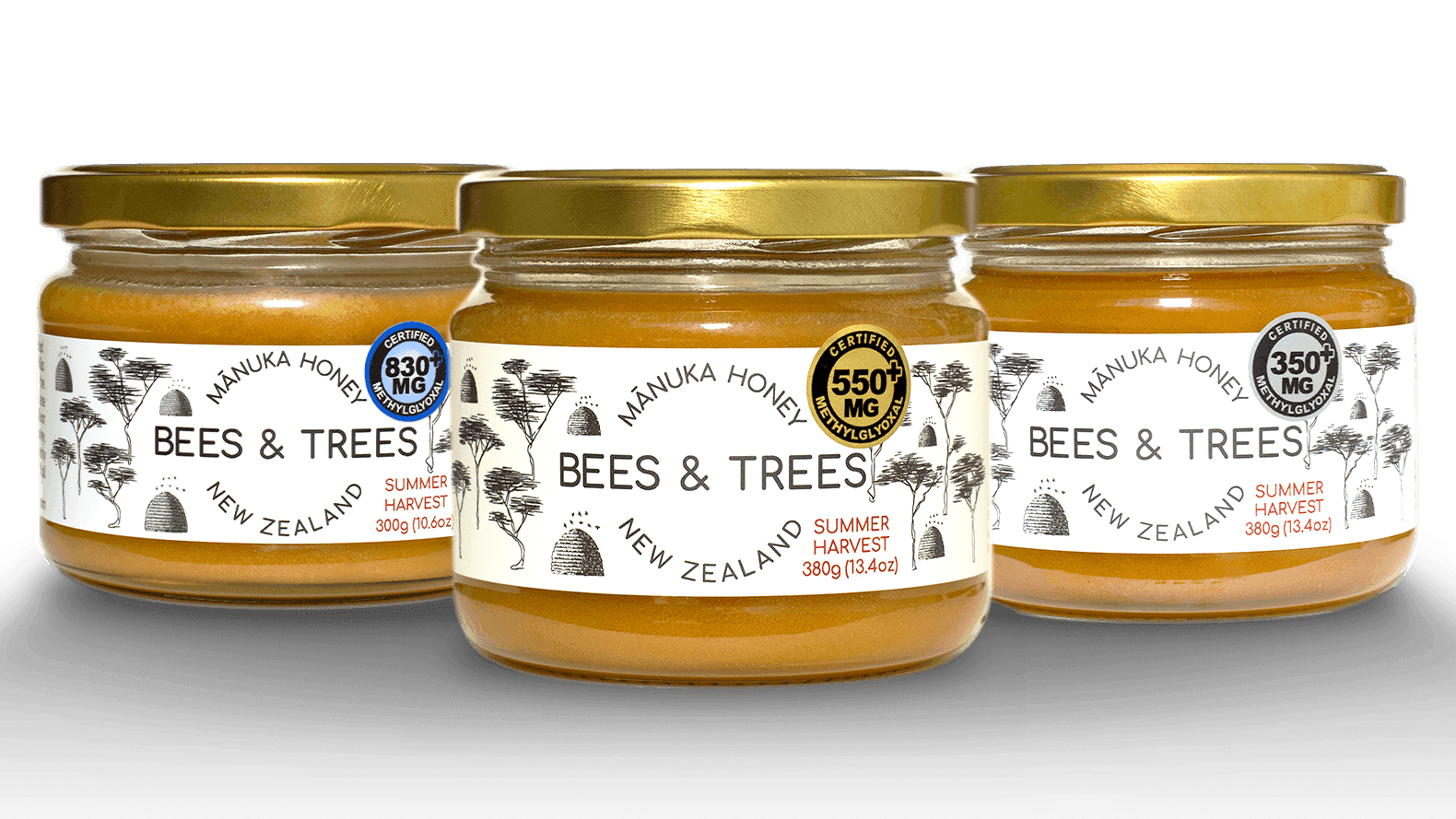
Mānuka Honey Mid-Activity 350+ MGO/kg

Mānuka Honey Mid-Activity 350+ MGO/kg

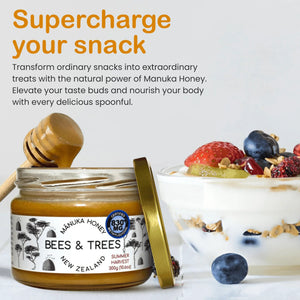
Our 350+ MGO honey is a gentle, everyday option to support your daily digestive wellness and microbiome balance. 

Best for: Maintaining bowel regularity, supporting gentle gut flora balance, soothing mild sensitivity, and providing a daily prebiotic boost.

Shop now
Mānuka Honey High-Activity 550+ MGO/kg

Mānuka Honey High-Activity 550+ MGO/kg

Our 550+ MGO honey offers stronger potency for those seeking targeted support during digestive flare-ups. 

Best for: Soothing occasional irritation, calming a more unsettled stomach, and providing reliable comfort when your digestive system feels sensitive.

Shop now
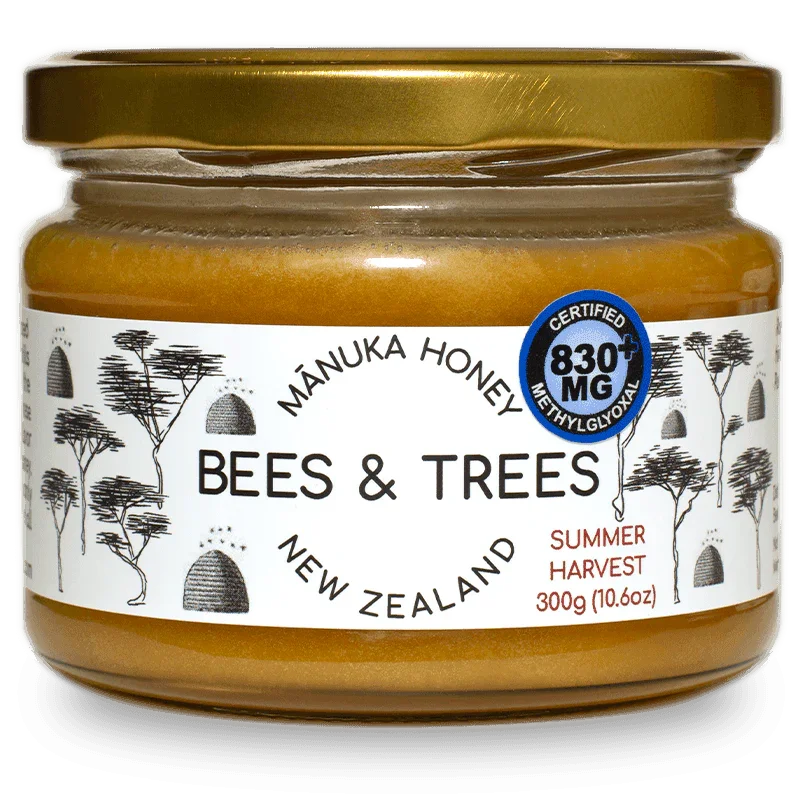
Mānuka Honey Founder's Reserve 830+ MGO/kg

Mānuka Honey Founder's Reserve 830+ MGO/kg

Our 830+ MGO jar delivers our most concentrated formula, providing the strongest bioactive defense for sensitive digestive tracts. 

Best for: Easing severe digestive discomfort, providing robust support for microbiome imbalances, and offering maximum anti-inflammatory support when you need it most.

Shop now

For severe pain, bleeding, or vomiting, always consult your healthcare provider immediately.

What the Science Suggests

Benefits of Mānuka Honey for IBS Support

Studies show Mānuka honey's unique profile of oligosaccharides provides gentle prebiotic activity that helps balance the gut microbiome. Scientists have also observed that Manuka honey's MGO and potent phenolic antioxidants work synergistically to help suppress inflammation and support the body's natural tissue repair cycles, strengthening the intestinal barrier and regulating the gastric environment, which naturally supports lasting digestive resilience. (Schell et al., 2022; Almasaudi et al., 2017; Nathani et al., 2023)

Other Digestive Health Benefits Explored in the Research

Digestive Comfort

Research suggests Mānuka honey’s viscous texture and honey’s prebiotic potential may help soothe upper-digestive irritation and support balanced gut function for everyday digestive comfort. (Gośliński et al., 2024; Schell et al., 2022)

Gut Healing

Research suggests honey can support intestinal barrier function, while Mānuka honey’s phenolic antioxidants may help protect digestive tissue from oxidative and inflammatory stress. (Nathani et al., 2023; Almasaudi et al., 2017)

Stomach Support

Preclinical Mānuka honey studies show protection of gastric mucosa, preserved mucus glycoproteins, and reduced oxidative stress, supporting comfort in irritated stomach tissue. (Almasaudi et al., 2016; Almasaudi et al., 2017)

Gastritis Relief

Preclinical Mānuka honey research shows reduced inflammatory cytokines, oxidative stress, and ulcer damage, supporting a calmer stomach lining and natural mucosal recovery. (Almasaudi et al., 2017; Almasaudi et al., 2016)
H. pylori Balance
Laboratory findings show Mānuka honey inhibits H. pylori through MGO-linked antibacterial activity that supports a less favorable environment for unwanted gastric microbes. (al Somal et al., 1994; Mavrić et al., 2008)

Stomach Ulcer Comfort

Scientists have observed that honey physically shields sensitive lesions to soothe irritation, while its bioactives support the underlying environment needed for natural tissue recovery. (Almasaudi et al., 2016; Almasaudi et al., 2017)

Acid Reflux Support

Human GERD research and viscosity studies suggest Mānuka honey may coat the esophagus, buffering sensitive tissue from acid backflow for soothing comfort. (Gośliński et al., 2024; Math et al., 2013)

Image item 1

100% Satisfaction Guaranteed

Image item 2

Glyphosate Residue Free

Image item 3

GenuHoney Authenticity
Certified

Image item 4

New Zealand.com License no. 100293

WHY CHOOSE BEES & TREES

Authenticity Sealed in Every Jar

We guarantee that what you see on the label is exactly what you get inside the jar.

Founded on Sustainability

From supporting New Zealand’s native ecosystem restoration to packaging in eco-friendly glass, we’re committed to protecting the environment that creates our honey.

Authentic New Zealand Sourcing

Harvested in the remote hillsides of Taranaki, our honey carries the Fernmark License, guaranteeing authenticity.

Independently Tested for Potency & Purity

Every batch is verified by accredited labs, with MGO results on the label and certificates published for full transparency.

FAQ

  • Does Mānuka honey help IBS?

  • Yes, Mānuka honey may offer supportive benefits for IBS-related digestive comfort. In-vitro studies suggest its oligosaccharides can act as prebiotics to help balance the gut microbiome. Additionally, cellular research indicates its phenolic antioxidants and MGO have the potential to moderate pro-inflammatory pathways, which may help ease post-meal discomfort and bloating. If symptoms persist, always consult a healthcare provider. (Schell et al., 2022; Sanz et al., 2005; Almasaudi et al., 2017; Johnston et al., 2018).

  • How do you take Mānuka honey for IBS symptoms?

  • For targeted IBS support, a practical starting point is ½ teaspoon daily taken before meals or on an empty stomach, gradually increasing to 1 teaspoon as tolerated. Allowing the honey to dissolve slowly may enhance its ability to physically coat and comfort the digestive tract. To preserve its bioactive compounds and natural enzymes when taken in a drink, add to warm (not boiling) water or tea. (Gośliński et al., 2024; Math et al., 2013; Wallace et al., 2010)

  • Is Mānuka honey low FODMAP?

  • No, because it naturally contains fructose, Mānuka honey is classified as a high-FODMAP food.  Consuming it in larger amounts may trigger physiological responses such as gas or distension in sensitive individuals. For those on a strict low-FODMAP protocol, dietary guidance suggests keeping servings very small, testing one dietary change at a time, and carefully tracking your digestive response. Always consult your gastroenterologist when adding new foods to your diet as a part of your overall care plan. If symptoms are persistent, always seek medical guidance. (Halmos et al., 2014; Shepherd et al., 2014; Lacy et al., 2021)

  • Does Mānuka honey help IBS bloating?

  • Mānuka honey may help ease the discomfort associated with IBS bloating by supporting a calmer digestive environment. Scientific reviews of Mānuka honey's anti-inflammatory properties suggest it may ease discomfort when bloating causes tightness or pressure by neutralizing oxidative stress in the gut. For best results, take a small serving before meals to leverage its natural enzymes, which in-vitro studies show can support smoother nutrient breakdown and daily comfort (Becerril-Sánchez et al., 2021; Almasaudi et al., 2017; Cianciosi et al., 2020; Miguel et al., 2017).

  • Can Mānuka honey help diarrhea?

  • During episodes of loose stools, research emphasizes that the primary focus must remain on hydration and electrolyte replacement. Randomized clinical trials have found that honey added to oral rehydration solution (ORS) reduced vomiting/diarrhea frequency and shortened recovery time. (Abdulrhman et al., 2010; Andayani et al., 2019) 

    If diarrhea is severe, lasts more than 48 hours, or includes fever, seek immediate medical care.

  • What's the best MGO level for IBS support?

  • The appropriate MGO level for IBS support depends on your specific digestive goals. A higher MGO rating indicates a greater concentration of its unique bioactive compounds. A 350+ MGO honey serves as a practical starting point for daily microbiome support. For more targeted support during occasional irritation, a 550+ MGO may be beneficial, while an 830+ MGO provides a more robust profile for focused, short-term support. (Mavrić et al., 2008; Johnston et al., 2018; Wallace et al., 2010; Almasaudi et al., 2017)

  • Can Mānuka honey make IBS symptoms worse?

  • Yes, Mānuka honey has the potential to trigger symptoms in certain sensitive individuals, although Mānuka honey has been found to be generally safe as a functional food product with clinical trials demonstrating it is well-tolerated in healthy adults. Because it naturally contains fructose, consuming large quantities may exacerbate issues like bloating or cramping for those with IBS. It is recommended to start with a minimal serving to assess your tolerance, ideally introducing it when your digestive symptoms are relatively stable. (Wilder-Smith et al., 2020; Halmos et al., 2014; Lacy et al., 2021)

  • Can I use Mānuka honey with probiotics or gut supplements?

  • Research suggests Mānuka honey can be safely incorporated alongside probiotics as part of a balanced gut routine. In laboratory models, its prebiotic oligosaccharides have been shown to act as nourishment for beneficial bacteria, potentially complementing the effects of probiotic supplements. When adjusting your routine, it is best to introduce one new supportive ingredient at a time to accurately monitor your digestive response. (Schell et al., 2022; Kajiwara et al., 2002; Wallace et al., 2010)

  • When should I see a doctor about IBS symptoms?

  • You should seek immediate medical evaluation if you experience any "red flag" symptoms alongside your IBS. Markers such as blood in your stool, fever, unexplained weight loss, iron-deficiency anemia, or severe, worsening pain require prompt professional assessment. Diagnostic testing is essential to ensure these symptoms are not indicating a more serious underlying medical condition.

    Note: Never give honey to infants under 12 months, and consult your doctor if you have diabetes or bee allergies.

    Disclaimer: These statements have not been evaluated by the Food and Drug Administration. This product is not intended to diagnose, treat, cure, or prevent any disease. This content is for informational purposes only and is not medical advice.