Mānuka Honey for IBD

Mānuka Honey for IBD

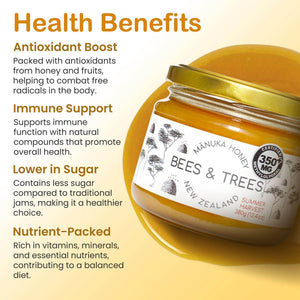
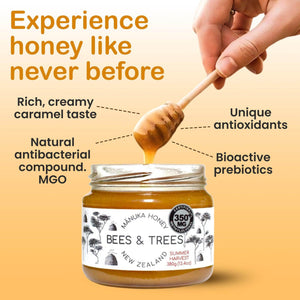
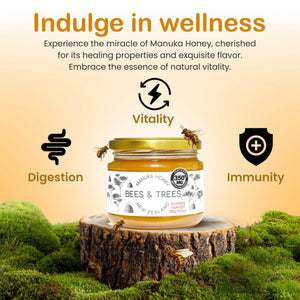
Mānuka honey offers promising, gentle support for digestive inflammation. Research indicates its powerful antioxidants may help calm and protect the gut lining, while its unique MGO bioactives may offer protection against the gut pathogens that trigger bowel inflammation. Together, they work synergistically to create a comfortable, supportive environment for optimal gut health.

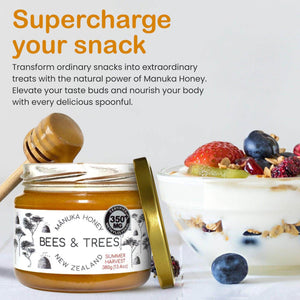
At Bees & Trees, we believe in providing transparency, the highest quality, and the best experience possible. Our authentic Mānuka honey is traceable from our hives straight to your door. Every jar delivers proven antimicrobial properties, trusted for digestive comfort, gut health, and daily wellness for you and your family.


img

Which MGO Concentration Is Right For IBD Support?

Select the MGO concentration that aligns with your needs, whether you are maintaining daily gut and bowel health or seeking intensive, soothing comfort for highly reactive digestion.

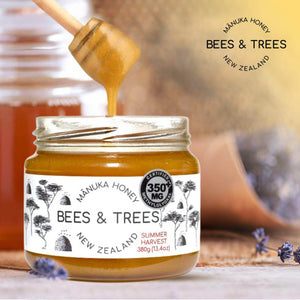
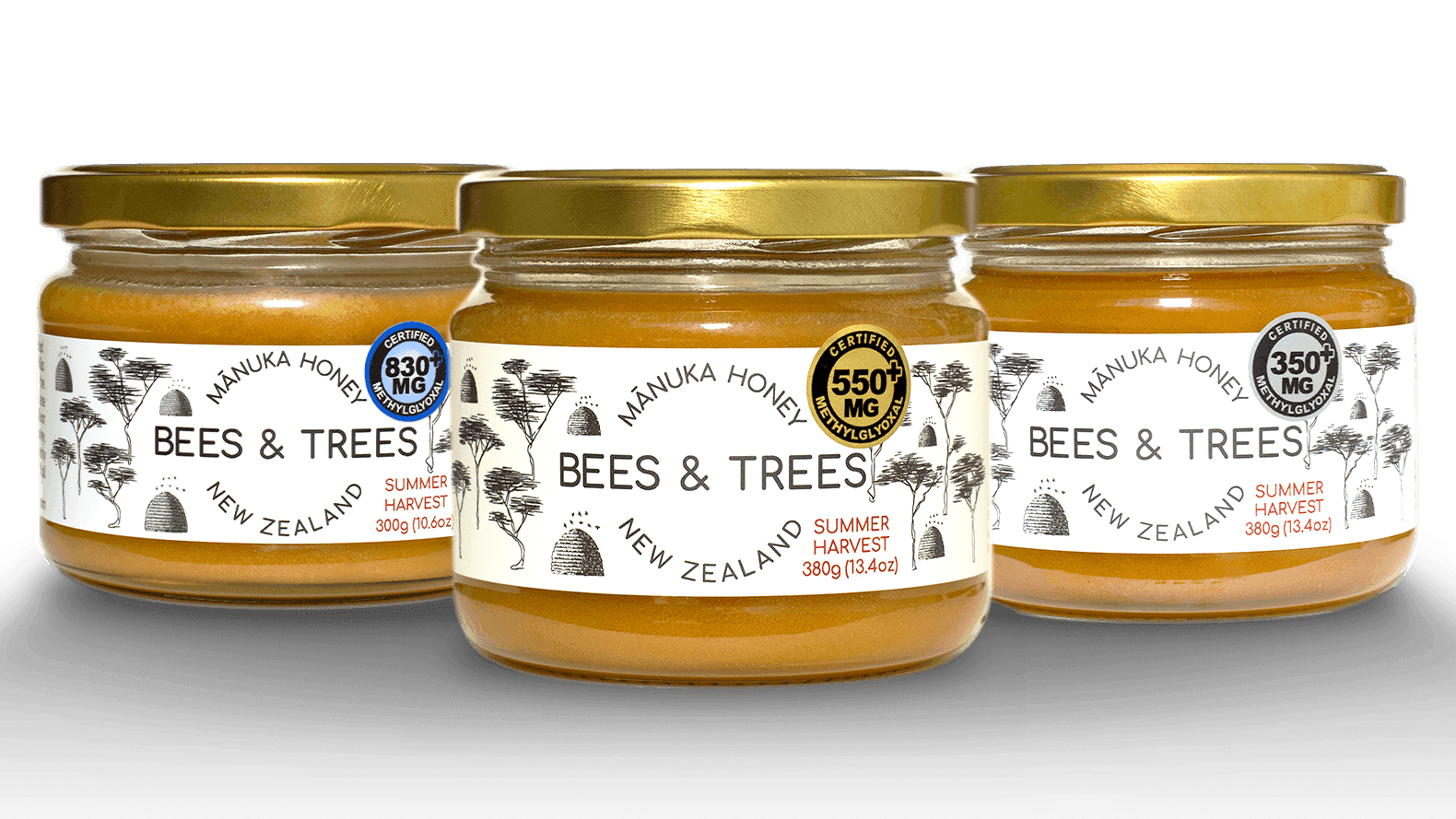
Mānuka Honey Mid-Activity 350+ MGO/kg

Mānuka Honey Mid-Activity 350+ MGO/kg

Our 350+ MGO honey serves as a gentle, everyday foundation to support microbiome balance and baseline digestive comfort. 

Best for: Daily dietary maintenance, gentle prebiotic support, and encouraging a calm, stable gut environment between periods of heightened sensitivity.

Shop now
Mānuka Honey High-Activity 550+ MGO/kg

Mānuka Honey High-Activity 550+ MGO/kg

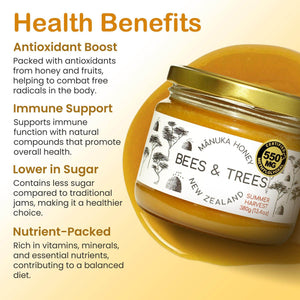
Our 550+ MGO honey offers a stronger concentration of bioactives, providing targeted mucosal support and enhanced antioxidant protection. 

Best for: Navigating periods of moderate digestive stress, comforting a sensitive stomach lining, and providing a stronger biological buffer against daily oxidative stressors.

Shop now
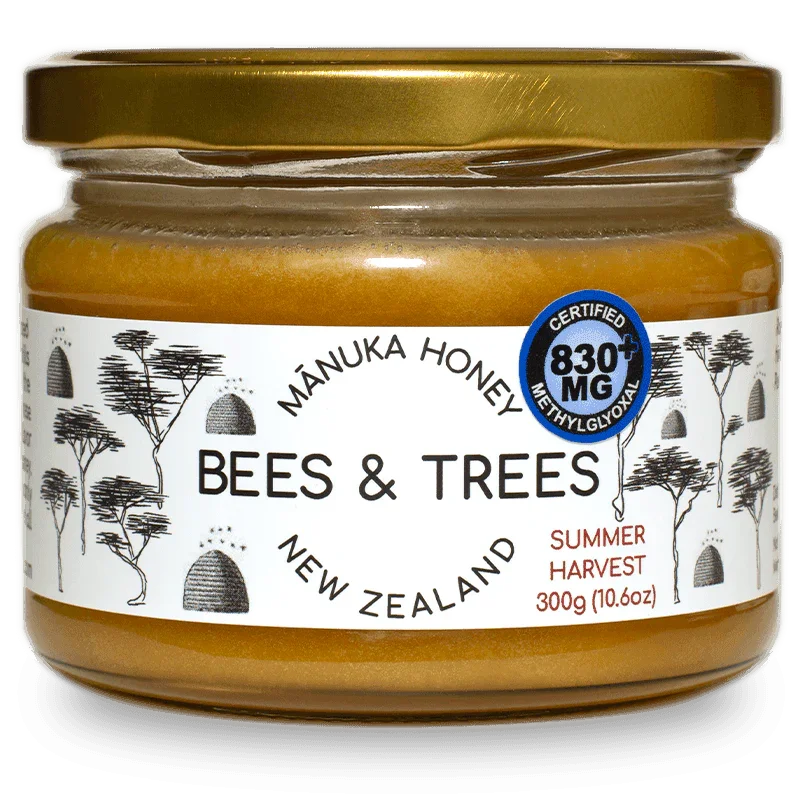
Mānuka Honey Founder's Reserve 830+ MGO/kg

Mānuka Honey Founder's Reserve 830+ MGO/kg

Our 830+ MGO jar delivers our maximum bioactive strength to provide robust dietary support for highly sensitive and reactive digestive tracts. 

Best for: Intensive antioxidant defense, maximizing soothing, natural comfort during digestive flare-ups, and complementing a broader IBD dietary management plan.

Shop now

For severe pain, bleeding, or vomiting, always consult your healthcare provider immediately.

What The Science Suggests

Benefits of Mānuka Honey for IBD Support

Mānuka honey's support for IBD centers on its high Methylglyoxal (MGO) content and phenolic antioxidant profile. Research in IBD models shows that Mānuka honey's phenolics reduce the oxidative stress and inflammatory signals that weaken the gut lining, while MGO targets the harmful bacteria that trigger and sustain bowel inflammation, with studies observing significant reductions in colonic inflammation and restored antioxidant parameters in treated groups. By supporting both the gut lining and a healthier microbial environment, high MGO Mānuka honey is a potent ally for chronic bowel health.(Mavric 2008; Almasaudi 2016; Prakash 2008; Medhi 2008)

Other Digestive Health Benefits Explored in the Research

IBD Support

In animal studies, Mānuka honey's phenolic antioxidants reduced colon inflammation and restored antioxidant defenses, supporting a calmer gut environment during inflammatory bowel stress. (Prakash et al., 2008 · Medhi et al., 2008)

Colitis Relief

Controlled colitis studies found Mānuka honey's phenolic antioxidants reduced bowel damage and oxidative stress, helping support a calmer colon during inflammatory flare-prone periods. (Prakash et al., 2008 · Medhi et al., 2008)

Gut Healing

Preclinical honey research suggests its antioxidant polyphenols may help protect the gut lining by supporting barrier function and reducing inflammatory stress in irritated intestinal tissue. (Nathani et al., 2023 · Prakash et al., 2008)

Soothe Gut Inflammation

Animal studies found Mānuka honey's phenolic antioxidants lowered inflammatory markers and oxidative stress in gastric tissue, helping support a calmer, more settled stomach environment. (Almasaudi et al., 2016 · Almasaudi et al., 2017)

Diarrhea Recovery

Clinical studies found honey's antimicrobial activity, when added to oral rehydration solution, shortened diarrhea recovery and reduced vomiting. (Abdulrhman et al., 2010; Mahyar et al., 2022)

Digestive Comfort

Research suggests honey's natural oligosaccharides may support beneficial gut bacteria, while Mānuka honey's texture may help soothe the upper digestive lining. (Kajiwara et al., 2002; Gośliński et al., 2023).

Image item 1

100% Satisfaction Guaranteed

Image item 2

Glyphosate Residue Free

Image item 3

GenuHoney Authenticity
Certified

Image item 4

New Zealand.com License no. 100293

WHY CHOOSE BEES & TREES

Authenticity Sealed in Every Jar

We guarantee that what you see on the label is exactly what you get inside the jar.

Founded on Sustainability

From supporting New Zealand’s native ecosystem restoration to packaging in eco-friendly glass, we’re committed to protecting the environment that creates our honey.
Authentic New Zealand Sourcing

Harvested in the remote hillsides of Taranaki, our honey carries the Fernmark License, guaranteeing authenticity.
Independently Tested for Potency & Purity

Every batch is verified by accredited labs, with MGO results on the label and certificates published for full transparency.

FAQ

  • Does Mānuka honey help IBD (Crohn's or ulcerative colitis)?

  • Animal studies have shown that Mānuka honey reduced colon inflammation, lowered key inflammatory markers, and restored antioxidant parameters in experimental IBD models, though large-scale human clinical trials are still needed to confirm these effects in people with Crohn's disease or ulcerative colitis. Mānuka honey is best used as a gentle, complementary addition alongside your gastroenterologist's care plan. Introduce it in small amounts and monitor your individual response. (Prakash 2008; Medhi 2008)

  • How do you take Mānuka honey when you have a sensitive gut?

  • Starting with half a teaspoon daily is the most practical approach for a sensitive gut, allowing you to assess individual tolerance before increasing to one teaspoon as needed. Research on honey as a functional food supports use in this range without adverse effects in healthy adults. Let it dissolve slowly, or stir into warm but not boiling water or tea after a meal to buffer digestion and protect heat-sensitive bioactive compounds. Stop if discomfort increases. (Gośliński et al., 2024; Wallace et al., 2010)

  • Can Mānuka honey worsen diarrhea?

  • It is possible in some individuals. Honey's natural fructose content can draw water into the bowel through osmosis if taken in large amounts, which may worsen urgency in those with already sensitive gut motility. However, clinical research also shows that honey used alongside oral rehydration solutions shortened recovery time from diarrhea in gastroenteritis patients. Start with half a teaspoon to observe your body's response, and pause if urgency increases.  (Abdulrhman 2010; Mahyar et al., 2022)

  • What's the best MGO level for IBD support?

  • For daily gut maintenance and general antioxidant support, 350+ or 550+ MGO provides a well-researched balance of phenolic anti-inflammatory activity and gentleness suitable for consistent use. For periods requiring stronger antibacterial and antioxidant support, 830+ MGO aligns with the higher potency levels studied in IBD and pathogen inhibition research, and is best used alongside medical guidance. (Gośliński et al., 2024; Wallace et al., 2010)

  • Can I use Mānuka honey with IBD medications?

  • Mānuka honey is a food product and is generally safe to use alongside standard IBD treatments, including aminosalicylates, corticosteroids, and biologics. Preliminary research has even explored the additive effect of Mānuka honey alongside sulfasalazine in experimental colitis models, observing complementary antioxidant benefits. As every IBD care plan is highly individual, always consult your gastroenterologist before incorporating any new foods regularly alongside your prescribed treatment. (Medhi 2008; Prakash et al., 2008)

  • Is Mānuka honey OK during an IBD flare?

  • During an active flare, Mānuka honey's high viscosity may help coat and protect irritated gastric tissue, and its phenolic antioxidants have been shown to reduce the inflammatory signals that drive mucosal damage. Tolerance during active flares varies significantly between individuals. Start with a very small amount (quarter to half a teaspoon) to assess how your system responds, and always follow your gastroenterologist's guidance for managing acute symptoms. (Wallace et al., 2010; Prakash et al., 2008)

  • When should I seek medical care for IBD symptoms?

  • Seek immediate medical attention if you experience severe pain, fever, blood in the stool, or signs of dehydration. You should never delay professional care for acute or worsening symptoms.

    Note: Not for infants under 12 months. If you need to limit sugars, use small servings and follow medical guidance.

    Disclaimer: These statements have not been evaluated by the Food and Drug Administration. This product is not intended to diagnose, treat, cure, or prevent any disease. This content is for informational purposes only and is not medical advice.