Mānuka Honey for GERD Support

Mānuka Honey for GERD Support

Rich in naturally occurring bioactives, Mānuka honey provides gentle support for maintaining a calm digestive tract. Its uniquely thick viscosity coats the esophagus, acting as a soothing buffer against occasional gastric acid exposure. Mānuka honey's rich antioxidants help to mitigate oxidative stress, encouraging a supportive internal environment that promotes lasting digestive wellness.

At Bees & Trees, we believe in providing transparency, the highest quality, and the best experience possible. Our authentic Mānuka honey is traceable from our hives straight to your door. Every jar delivers proven antimicrobial properties, trusted for digestive comfort, gut health, and daily wellness for you and your family.


img

Which MGO Concentration Is Right for Your GERD Support Needs?

Select the MGO concentration that fits your needs, whether you are seeking daily dietary maintenance or intensive support for occasional upper digestive sensitivity.

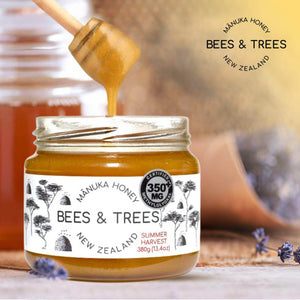
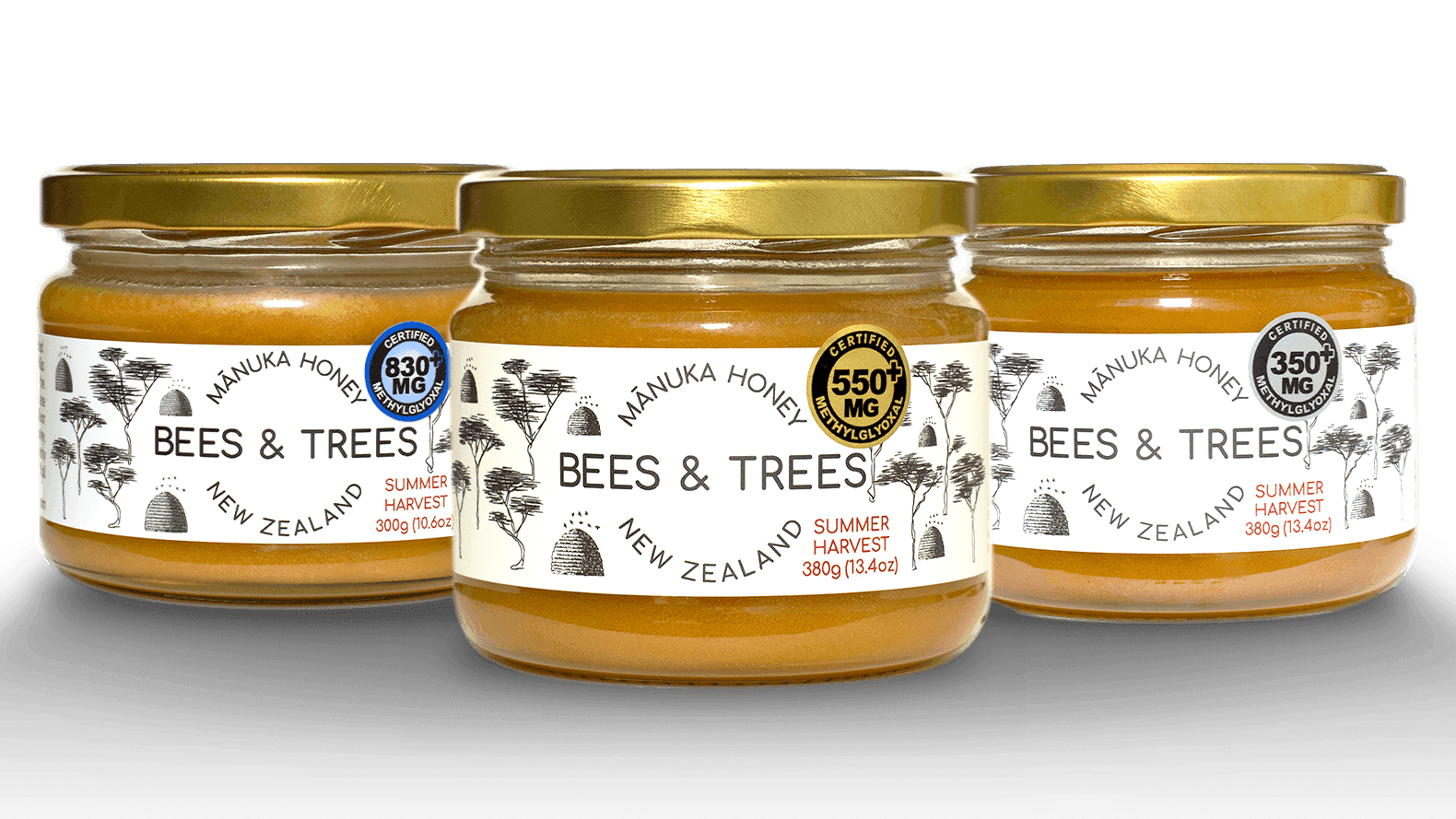
Mānuka Honey Mid-Activity 350+ MGO/kg

Mānuka Honey Mid-Activity 350+ MGO/kg

Our 350+ MGO honey is a gentle, everyday option to support your daily digestive wellness routine and maintain a balanced gut environment.

Best for: Supporting gentle esophageal comfort, maintaining overall digestive balance, and providing a soothing daily wellness boost.

Shop now
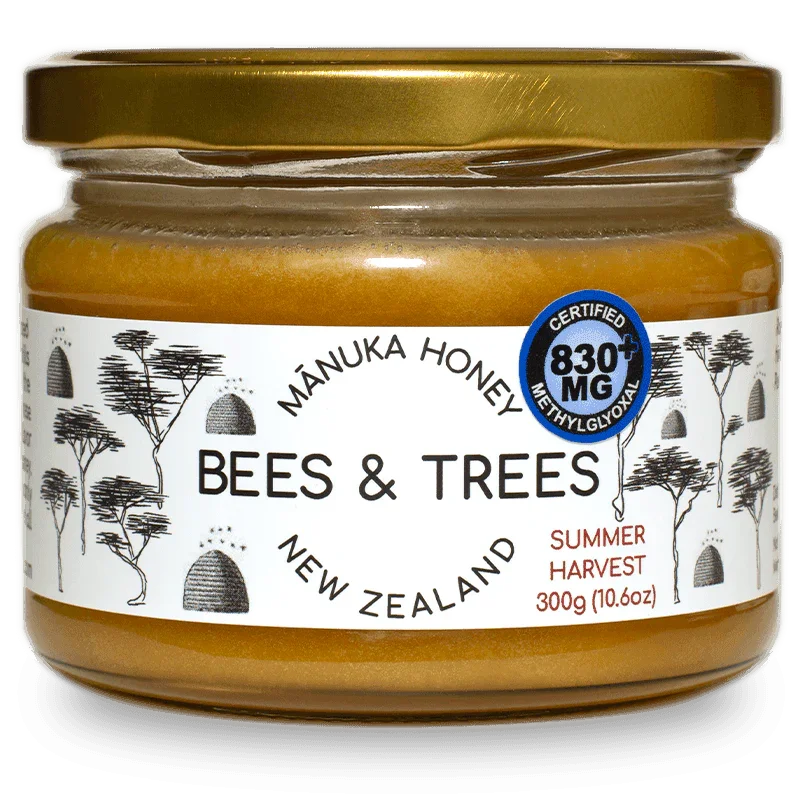
Mānuka Honey High-Activity 550+ MGO/kg

Mānuka Honey High-Activity 550+ MGO/kg

Our 550+ MGO honey offers elevated MGO strength for those seeking targeted dietary support during times of occasional upper digestive upset.

Best for: Providing a comforting coating to the esophagus during occasional gastric stress, easing mild sensitivity, and supporting a balanced upper digestive environment.

Shop now
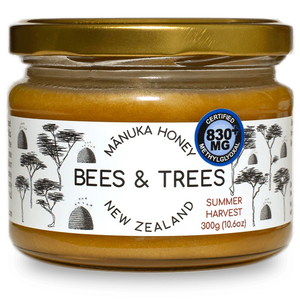
Mānuka Honey Founder's Reserve 830+ MGO/kg

Mānuka Honey Founder's Reserve 830+ MGO/kg

Our 830+ MGO jar features our highest level of MGO, providing the strongest antioxidant and soothing support available in our range.

Best for: Easing intense, occasional upper digestive discomfort, comforting highly sensitive digestive tracts, and providing robust bioactive support when your system needs it most.

Shop now

For severe pain, bleeding, or vomiting, always consult your healthcare provider immediately.

What the Science Suggests

Benefits of Mānuka Honey for GERD Relief

Clinical studies show Mānuka honey's impact goes well beyond surface-level comfort. Its high Methylglyoxal (MGO) content maintains resilient antibacterial action even in highly acidic conditions, targeting the underlying bacterial imbalances that often worsen indigestion. Additionally, its phenolic compounds contribute to reducing oxidative stress, supporting the natural cellular repair of irritated tissue to promote lasting digestive comfort and long-term esophageal health. (Mavric 2008; Carter 2016; Becerril-Sánchez 2021; Almasaudi 2017)

Other Digestive Health Benefits Explored in the Research

Acid Reflux Comfort

Research shows Mānuka honey's high viscosity and low surface tension act as a physical barrier, actively coating the esophageal mucosa to shield sensitive nerve endings from the corrosive effects of rising gastric acid. (Gośliński et al., 2024; Math et al., 2013)

GERD Relief

Clinical observations suggest its demulcent properties form a protective microfilm over the pharynx and larynx, buffering delicate throat tissues against acid backflow that causes hoarseness and chronic irritation. (Gośliński et al., 2024; Math et al., 2013)

Digestive Comfort

Studies indicate that its unique profile of oligosaccharides acts as a prebiotic, promoting the growth of beneficial gut flora to support a balanced microbiome and smoother overall digestion. (Sanz et al., 2005; Schell et al., 2022)

Gut Healing

Cellular studies indicate that Mānuka honey supports vascularization, a key regenerative process, while its phenolic antioxidants reduce the oxidative stress that compromises gut lining integrity and barrier function. (Nathani et al., 2023; Almasaudi et al., 2017)

Stomach Support

Cellular research demonstrates that potent phenolic compounds within the honey actively suppress pro-inflammatory cytokines, neutralizing oxidative stress and aiding the natural tissue repair of an irritated gastric mucosa. (Almasaudi et al., 2017; Becerril-Sánchez et al., 2021)

H. pylori Balance

Laboratory studies confirm that its unique Methylglyoxal (MGO) content exerts stable, non-peroxide bactericidal activity, directly inhibiting the growth of H. pylori to address microbial imbalances that often exacerbate reflux. (al Somal et al., 1994; Mavrić et al., 2008)

Image item 1

100% Satisfaction Guaranteed

Image item 2

Glyphosate Residue Free

Image item 3

GenuHoney Authenticity
Certified

Image item 4

New Zealand.com License no. 100293

WHY CHOOSE BEES & TREES

Authenticity Sealed in Every Jar

We guarantee that what you see on the label is exactly what you get inside the jar.

Founded on Sustainability

From supporting New Zealand’s native ecosystem restoration to packaging in eco-friendly glass, we’re committed to protecting the environment that creates our honey.
Authentic New Zealand Sourcing

Harvested in the remote hillsides of Taranaki, our honey carries the Fernmark License, guaranteeing authenticity.
Independently Tested for Potency & Purity

Every batch is verified by accredited labs, with MGO results on the label and certificates published for full transparency.

FAQ

  • Is Mānuka honey good for GERD?

  • Yes. Research indicates Mānuka honey is highly effective for GERD support due to its unique high viscosity and potent anti-inflammatory properties. Clinical studies show it creates a physical coating over the esophagus that shields against acid damage and helps soothe irritation, while its bioactives soothe the chronic inflammation associated with the condition. Users who've tried Mānuka honey for GERD commonly describe noticeable, soothing relief, especially a reduced burning sensation and a calmer, less "raw" throat, often within minutes of taking a small spoonful. Some users report it helps them feel more comfortable after meals or during reflux flare-ups, with a few saying it worked better for them than certain OTC options, though experiences vary, and a small number find that sweetness can be a trigger. (Gośliński et al., 2024; Math et al., 2013; Becerril-Sánchez et al., 2021)

  • How do you take Mānuka honey for GERD or acid reflux?

  • Research protocols suggest taking Mānuka honey on an empty stomach for optimal esophageal coating. One human GERD pilot study used 5g (approximately 1 teaspoon) three times daily, on an empty stomach or 30 minutes before meals in the morning and between meals, for 4 weeks with Mānuka honey ≥400 mg/kg MGO. Take it straight from the spoon or dissolve it in warm (not boiling) water, as high heat can alter MGO chemistry. For nighttime reflux, taking a dose before bed allows the viscous texture to coat the esophagus during sleep. Start with ½–1 teaspoon once or twice daily and adjust to your preference. (Gośliński et al. 2024; Math et al. 2013)

  • What's the best MGO level for GERD support?

  • Laboratory testing confirms that higher MGO levels deliver stronger, more concentrated antimicrobial activity. However, the "best" level depends entirely on your goals. Research supports starting with 350+ MGO for daily comfort and maintenance. For targeted relief, 550+ MGO could provide stronger support, while 830+ MGO provides maximum bioactive defense for short periods of severe irritation. (Cokcetin et al., 2016; Mavrić et al., 2008; Gośliński et al., 2024)

  • Can Mānuka honey help LPR (silent reflux)?

  • Yes, Mānuka honey may offer soothing comfort for the throat irritation commonly associated with LPR. Its thick, viscous texture has the potential to coat the upper digestive lining, providing a gentle barrier against occasional acid exposure. While direct LPR research is still emerging, studies on general reflux suggest its protective properties may help ease upper respiratory and throat discomfort. Always consult a medical professional for persistent hoarseness, chronic cough, or trouble swallowing. (Gośliński et al., 2024; Math et al., 2013; Katz et al., 2022)

  • Does Mānuka honey help with the "lump in throat" feeling (Globus)?

  • Yes. Scientific evidence points to acid irritation in the lower throat (LPR) as a primary cause of the globus ("lump in throat") sensation. Mānuka honey acts as a natural demulcent, physically coating and soothing this specific area. This protective layer helps reduce the sensitivity and tissue irritation that triggers the globus feeling. (Lee & Kim, 2012; Krause et al., 2021; Math et al., 2013)

  • Can Mānuka honey make reflux worse?

  • While Mānuka honey is generally gentle and considered safe, it does contain natural sugars that may occasionally trigger reflux in sensitive individuals. Because digestive responses vary significantly from person to person, it is recommended to start with a very small amount (¼ to ½ teaspoon) to carefully assess your stomach's tolerance before regular use. (Gośliński et al., 2024; Pasupuleti et al., 2017; Katz et al., 2022)

  • Can I use Mānuka honey with omeprazole or antacids?

  • Studies testing Mānuka honey alongside standard medications demonstrate it acts as a safe, complementary food-based comfort option. It can provide gentle support to a clinician's broader GERD plan. Always consult your clinician for personalized guidance if you are on PPIs, H2 blockers, or experiencing ongoing symptoms. (Gośliński et al., 2024; Wallace et al., 2010; Katz et al., 2022)

  • Can Mānuka honey heal a damaged esophagus?

  • Research suggests Mānuka honey may provide helpful bioactive support for the body's natural recovery processes. Clinical literature has shown that its antioxidant properties have the potential to ease oxidative stress along the digestive mucous membranes, which may help encourage a more comforting, supportive environment for the body's natural tissue repair. (Gośliński et al., 2024; Tashkandi, 2021; Becerril-Sánchez et al., 2021)

  • How long should I try Mānuka honey for GERD comfort?

  • Observational data suggest evaluating its effects after taking a small daily serving before meals for 2 to 4 weeks. For the best results, this should be paired with evidence-backed GERD basics: eating smaller meals, dining earlier, and avoiding known triggers. If symptoms persist or frequently return, seek medical advice to confirm the underlying physiological drivers of your reflux. (Gośliński et al., 2024; Katz et al., 2022)

  • When should I see a doctor about GERD?

  • Clinical guidelines recommend seeking medical care if you experience reflux more than twice weekly, or if you develop symptoms such as chest pain, trouble swallowing, vomiting, black stools, unexplained weight loss, anemia, or persistent nausea. These physiological markers signal a condition requiring proper diagnostic evaluation and targeted medical treatment. 

    Note: Never give honey to infants under 12 months, and consult your doctor if you have diabetes or bee allergies.

    Disclaimer: These statements have not been evaluated by the Food and Drug Administration. This product is not intended to diagnose, treat, cure, or prevent any disease. This content is for informational purposes only and is not medical advice.