



















FAQ
What is the best honey for digestive issues?

-
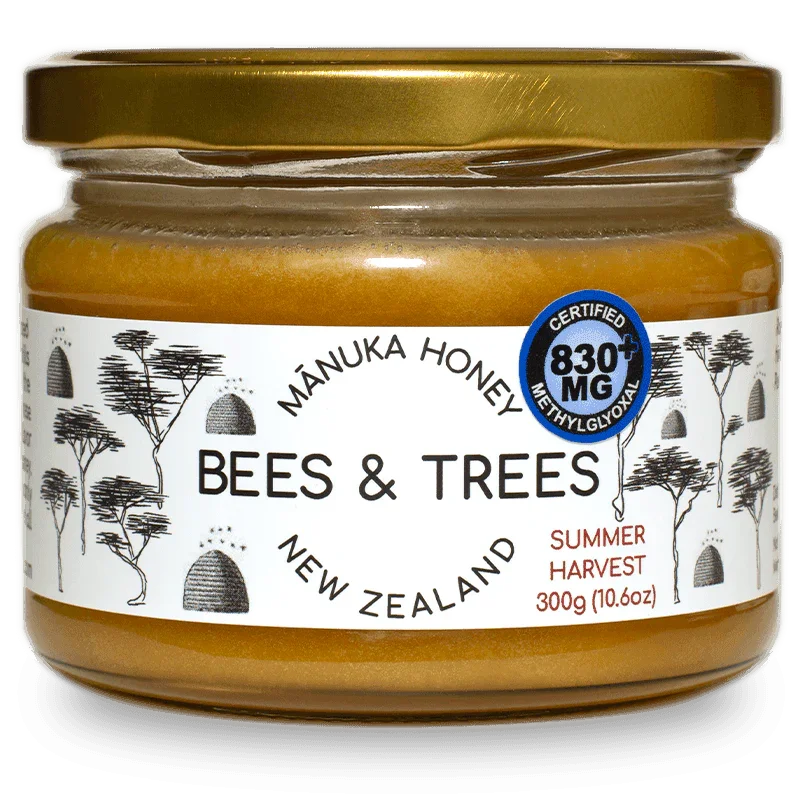
A raw, independently tested high-MGO Mānuka honey is a strong choice for targeted digestive wellness. Its naturally high Methylglyoxal (MGO) content gives it stable, non-peroxide bioactivity that survives and persists in the acidic gastric environment, while its prebiotic oligosaccharides help support a balanced gut microbiome. Preclinical research also highlights Mānuka honey's antioxidant activity, which may help protect the gastric lining and support the integrity of the mucosal layer in the stomach lining. For best quality, choose raw, unpasteurized Mānuka honey that is sourced from New Zealand and verified by independent testing for its MGO level. Bees & Trees Mānuka honey is carefully harvested and lab-certified, giving you a transparent, high-potency option for daily digestive comfort, microbial balance, and overall gut resilience. (Mavrić et al., 2008; Johnston et al., 2018; Sanz et al., 2005; Almasaudi et al., 2017)
Does Mānuka honey heal the gut lining?
-
Early research suggests Mānuka honey may offer helpful bioactive support for the body's natural recovery of the gut lining. Studies indicate it has the potential to support the structural proteins that keep the intestinal barrier properly sealed, while animal models suggest it may help preserve the glycoproteins that protect the digestive tract. Additionally, its phenolic antioxidants may help ease the oxidative stress linked to mucosal damage, and cellular research indicates it could encourage the natural blood flow needed to deliver nutrients to sensitive tissue. Together, this research suggests Mānuka honey may serve as a soothing, natural ally for the body’s natural digestive repair processes. (Nathani et al. 2023; Almasaudi et al. 2016; Almasaudi et al. 2017)
How to take Mānuka honey for gut health or digestive problems?
-
For targeted gut health support, consider taking ½ to 1 teaspoon of Mānuka honey on an empty stomach, either first thing in the morning or between meals. One human trial used 5g (approximately 1 teaspoon) three times daily while fasting in the morning and between meals, for 4 weeks. Taking it straight 15 to 30 minutes before meals preserves its viscous texture, which creates the protective coating along the stomach lining observed in studies. If used in beverages, dissolve in warm (not boiling) water. For gut health support, ½–1 teaspoon on an empty stomach allows its bioactive compounds to coat the digestive tract effectively. (Gośliński et al. 2024; Math et al. 2013)
Is Mānuka honey good for digestion?
-
Yes, Mānuka honey is a great natural option that may support everyday digestive wellness. Its thick, viscous texture can provide physical comfort by coating the digestive tract, while its natural prebiotics have been shown to help nourish beneficial gut bacteria. Additionally, the unique MGO in Mānuka honey offers stable antibacterial properties that can survive harsh stomach environments, which may help manage potentially harmful bacteria without disrupting your healthy flora. Together, these mechanisms position Mānuka honey as a promising natural support for everyday digestive wellness. (Sanz et al. 2005; Johnston et al. 2018; Schell et al. 2022; Math et al. 2013)
Is Manuka honey a probiotic or a prebiotic?
-
Mānuka honey is a prebiotic, not a probiotic—it feeds beneficial gut bacteria rather than providing live microorganisms. It contains oligosaccharides (complex carbohydrates) that selectively promote Lactobacillus and Bifidobacteria growth. Additionally, Mānuka honey's MGO (methylglyoxal) provides antimicrobial activity against harmful bacteria while its prebiotic compounds nourish beneficial flora, creating dual digestive support. These properties make Mānuka honey a functional food for microbiome balance. (Sanz et al. 2005; Schell et al. 2022; Johnston et al. 2018)
Can Manuka honey worsen my digestive health symptoms?
-
Clinical safety studies report Mānuka honey is safe and generally well tolerated for most healthy adults, but honey contains natural sugars (primarily fructose and glucose) that may trigger symptoms in people with fructose malabsorption, IBS, or following low-FODMAP protocols. Research suggests starting with small amounts (¼–½ teaspoon) to assess tolerance before increasing dosage. Discontinue use if symptoms worsen. People with diabetes should monitor their blood glucose. (Wallace et al. 2010; Gośliński et al. 2024)
Note: Never give honey to infants under 12 months, and consult your doctor if you have diabetes or bee allergies.
Disclaimer: These statements have not been evaluated by the Food and Drug Administration. This product is not intended to diagnose, treat, cure, or prevent any disease. This content is for informational purposes only and is not medical advice.